
TL;DR
- Writing words of remembrance for a loved one starts with gathering personal memories, choosing a tone, and structuring your thoughts around specific stories rather than generalizations.
- A memorial tribute can take many forms: a spoken eulogy at a funeral, a written message for a memorial card, or a lasting digital tribute on a QR code memorial page.
- More than 57% of Americans have experienced a major loss in the last three years, and 75% of mourners say rituals and memorial tributes help them process grief.
- This guide walks you through a 7-step process for writing a meaningful tribute, with real examples and templates you can adapt.
- Digital memorial technology now lets you preserve tributes permanently so future generations can scan a QR code and experience the full story of someone’s life.
Why Words of Remembrance for a Loved One Truly Matter
Finding the right words of remembrance for a loved one is one of the most meaningful things you can do during a time of loss. Whether you are preparing a tribute for a memorial service, writing a heartfelt message for a memorial page, or crafting a goodbye message for someone who passed away, your words carry the power to honor a life, comfort the grieving, and preserve memories for generations to come.
of Americans have experienced a major loss in the last three years (The Recovery Village, 2025)
With so many families navigating grief, the need for guidance on writing tributes has never been greater. Research from The Recovery Village shows that 75% of mourners find rituals and memorial tributes help them process their loss and move toward acceptance. Yet many people feel paralyzed when asked to put their feelings into words. If that sounds familiar, you are not alone, and this guide is here to help.
The good news is that writing a tribute does not require literary talent. It requires sincerity, a willingness to reflect, and a simple structure to follow. Below, you will find everything you need to craft words of remembrance for a loved one that feel authentic and lasting.
Understanding Memorial Tributes: Types and Formats
Before you begin writing, it helps to understand the different types of tributes and where they are typically shared. The format you choose will shape the length, tone, and content of your words.
Key Distinction: A eulogy is typically a formal speech delivered at a funeral or memorial service. A tribute is broader and can take many forms: spoken, written, visual, or digital. Both serve the same purpose of honoring a life.
Spoken Tributes and Funeral Speeches
Spoken tributes and tribute speeches are delivered during a funeral, celebration of life, or memorial gathering. Speech of tribute examples typically run 3 to 5 minutes (roughly 400 to 800 words) and include a mix of personal stories, the person’s qualities, and a message of gratitude. If you have been asked to deliver tribute speeches, focus on two or three defining memories rather than trying to cover everything. Your audience will connect more deeply with specific moments than with a broad summary.
Written Tributes and Memorial Messages
Written tributes appear on sympathy cards, memorial programs, obituaries, and online memorial pages. A tribute message to a dead friend or family member might be as short as a single paragraph or as long as a full page. Short remembrance quotes for loved ones work well for cards and social media posts, while longer written tributes are better suited for memorial booklets or digital memorial pages where space is not limited.
Digital Memorial Tributes
Digital memorial tributes are growing rapidly. According to Market Growth Reports, 67% of digital memorials in 2025 featured customized video tributes, music playlists, and interactive eulogies. QR code memorials allow families to attach a tribute memorial directly to a headstone or plaque so that anyone who visits can scan the code and experience photos, videos, stories, and the full tribute. This bridges the gap between the physical monument and the rich, living story of the person it represents.
Step-by-Step Guide: Writing Words of Remembrance for a Loved One
Whether you are composing a spoken eulogy, a written tribute, or a goodbye message for someone who passed away, this 7-step process will guide you from blank page to finished piece.
Step 1: Gather Memories and Reflections
Start by jotting down everything you remember. Do not worry about organization yet. Think about the moments that made this person who they were: their habits, their favorite sayings, the way they laughed, a trip you took together, a lesson they taught you. Talk to other family members and friends to gather perspectives you might not have considered. The more raw material you have, the easier the writing will be.
Step 2: Choose Your Format and Tone
Decide whether your tribute will be spoken or written, formal or conversational. A tribute at a religious service may call for a more reverent tone, while a celebration of life might welcome humor and lightheartedness. Let the personality of the person you are honoring guide this decision. If they were warm and funny, let that come through. If they were quiet and deeply kind, let the tribute reflect that.
Step 3: Create an Outline
A simple structure keeps your tribute focused and easy to follow. A tried-and-true outline looks like this: open with a hook (a quote, a memory, or a defining quality), share two or three stories that illustrate who they were, acknowledge their legacy and impact, and close with a message of gratitude or hope. This framework works for both spoken and written tributes of any length.
Step 4: Write from the Heart
The most powerful tributes are the ones that sound like the person writing them. Use your natural voice. Avoid cliches when you can, and instead lean into specific details. Instead of saying “she was always there for everyone,” try: “When I called her at 2 AM the night before my wedding, panicking about the flowers, she drove 40 minutes to my apartment with a cup of tea and a plan.” Specific moments land harder than general praise.
Step 5: Include Meaningful Details
Weave in elements that capture the person’s spirit: a favorite quote, a song they loved, a tradition they started, or a piece of wisdom they repeated. These details make the tribute feel alive. If you are looking for short remembrance quotes for loved ones to include, consider using their own words. A phrase your grandmother always said will resonate more than a generic quote from the internet.
Step 6: Edit and Refine
Read your tribute aloud. This is especially important if you will be delivering it as a speech, but it helps with written tributes too. Listening to the words helps you catch awkward phrasing, spots that run too long, and moments that need more emotional weight. Ask a trusted friend or family member to read it and offer feedback. Editing is not about removing emotion; it is about making your emotion land more clearly.
Step 7: Practice and Prepare for Delivery
If you are giving a spoken tribute, practice several times. Familiarize yourself with the flow so you are not reading word-for-word. Mark spots where you might get emotional and plan a brief pause. Bring a printed copy with larger font. And remember: it is okay to cry. Your audience understands, and your vulnerability makes the tribute more powerful, not less.
Tribute Examples and Templates to Inspire Your Words
Sometimes the hardest part is getting started. Here are examples of tribute messages you can use as a starting point and adapt to your own situation.
Short Tribute for a Parent:
“Dad taught me that showing up is the most important thing you can do. He showed up to every game, every recital, every hard conversation. He showed up when it was inconvenient and when no one would have noticed if he hadn’t. That consistency was his superpower, and it shaped every one of us into people who try to show up for others the way he showed up for us.”
Tribute Message to a Dead Friend:
“Marcus had this way of making everyone feel like the most interesting person in the room. He remembered the small things: your dog’s name, the book you mentioned three months ago, the fact that you hate cilantro. Losing him feels like losing a language only we spoke. But the things he taught me about kindness and paying attention, those I carry forward every day.”
Goodbye Message for Someone Who Passed Away (Digital Memorial):
“Grandma Rosa’s kitchen was the center of the universe. Every Sunday, the whole family gathered around her table, and no one left without a full stomach and at least one piece of unsolicited advice. She preserved more than recipes; she preserved our family’s story. Now, through this memorial page, we are preserving hers, so that the great-grandchildren she dreamed of will know exactly who she was and how much she loved them.”
These examples of tribute illustrate an important principle: the best tributes are built around specific, vivid memories, not abstract praise. Use these as templates, but fill them with your own stories. That is where the real power lives.

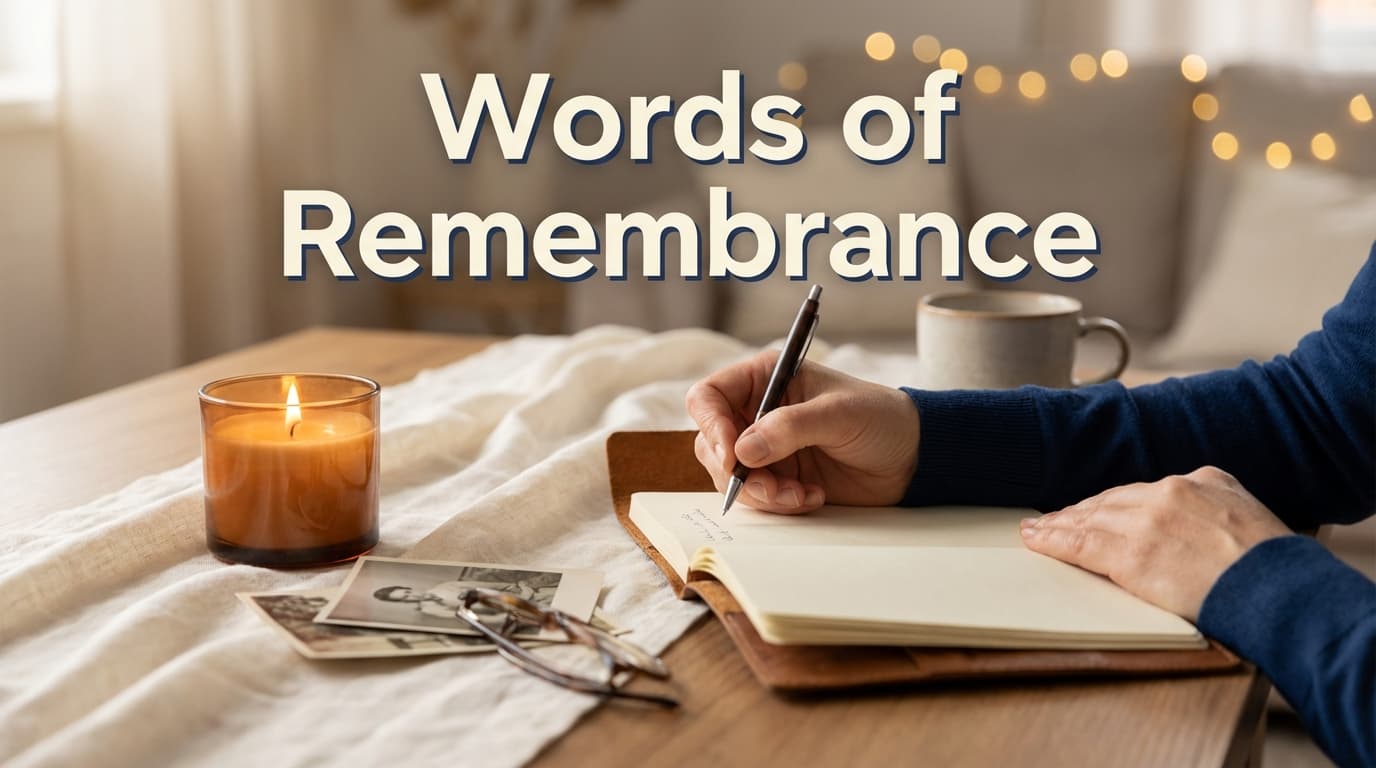
A step-by-step visual guide to writing meaningful words of remembrance for a loved one.
Preserving Your Tribute with Digital Memorial Technology
A spoken tribute lives in the memory of those who heard it. A written tribute may sit in a drawer or get lost in an email thread. But a digital tribute memorial can last forever and reach people who were not able to attend the service, including future generations who never had the chance to meet your loved one.
of funeral homes now offer QR-coded digital memorials as a standard service
QR code memorials work by etching a scannable code directly onto a headstone, memorial plaque, or grave marker. When a visitor scans the code with their smartphone, they are taken to a digital memorial page where they can read the tribute you wrote, view family photos, watch video messages, and even add their own stories and remembrances.
This is what makes platforms like Linkora so powerful for families. Instead of a static inscription limited to a few words, a QR code on a headstone transforms the monument into a living digital memorial. Your tribute, along with photos, videos, family tree information, and contributions from other loved ones, is preserved in a single, accessible place. No app required. Just scan and remember.
Trusted by over 500 families with more than 12,000 photos preserved and a 98% caretaker satisfaction rate, Linkora’s privacy-first platform gives families complete control over what is shared and who can see it. It is built for real families, accessible and intuitive enough for multigenerational use.