
Green Burial Guide: Eco-Friendly Ways to Return to the Earth
A growing movement is reimagining how we say goodbye. From natural burial to human composting, families are choosing environmentally conscious end-of-life options that honor both the person and the planet.
Important Disclaimer
This content is for informational purposes only and does not constitute legal advice. Laws vary by jurisdiction. Consult a qualified attorney for advice specific to your situation.
Last reviewed: April 12, 2026
Important: Green burial regulations vary by state and locality. Always verify options and legality in your area before making plans. All costs listed are approximate ranges based on available data and are not guarantees. Prices vary by provider and region.
Reviewed by
Linkora Editorial Team
Environmental end-of-life research and memorial care
What Is Green Burial?
Green burial is an approach to final disposition that prioritizes environmental sustainability. At its core, it means burial without embalming chemicals, in a biodegradable container (or no container at all), in a natural setting. The goal is to allow the body to return to the earth naturally, without introducing harmful substances into the soil.
More broadly, the term “green disposition” encompasses any environmentally conscious end-of-life option, including aquamation, human composting, conservation burial, and memorial trees. These alternatives share common principles:
- No toxic embalming chemicals (traditional embalming uses formaldehyde, a known carcinogen)
- Biodegradable or minimal containers (no metal caskets or concrete vaults)
- Reduced carbon footprint compared to traditional burial or cremation
- Land conservation and habitat restoration where applicable
- Lower overall cost in many cases
Types of Green Disposition
Each option has different processes, costs, and availability. Here are six eco-friendly approaches to end-of-life care.
Natural / Green Burial
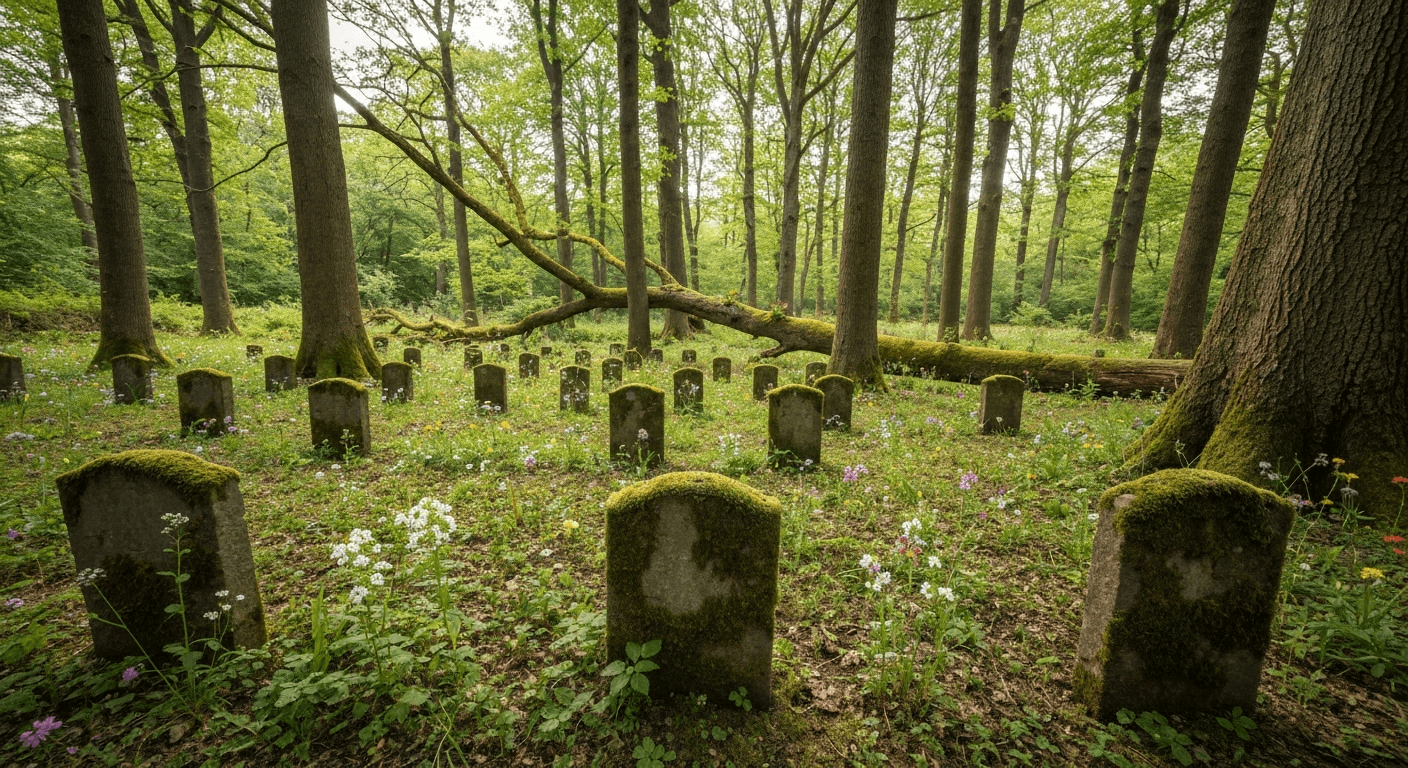
The body is placed in a biodegradable shroud or casket (untreated wood, wicker, or bamboo) and buried without embalming in a certified green cemetery. The grave is typically marked with a native plant, tree, or natural stone rather than a traditional headstone. The goal is to allow the body to return to the earth naturally, nourishing the soil.
Approximate Cost
$1,000 - $4,000
vs. $7,848 average traditional burial
Source: Green Burial Council; NFDA 2023 data for cost comparison
Aquamation (Alkaline Hydrolysis)
A water-based process that uses an alkaline solution (potassium hydroxide) in a pressurized, heated vessel to accelerate natural decomposition. The process takes 6 to 8 hours and produces bone ash (returned to the family) and a sterile liquid that can be safely returned to the water system. Aquamation uses approximately one-tenth the energy of flame cremation and produces no direct emissions.
Approximate Cost
$2,000 - $3,000
similar to traditional cremation
Legal Status
Legal in 28+ states as of 2024
Source: Green Burial Council
Human Composting (Natural Organic Reduction)
The body is placed in a vessel with organic materials such as wood chips, alfalfa, and straw. Over 30 to 45 days, naturally occurring microbes transform the remains into approximately one cubic yard of nutrient-rich soil. The soil is returned to the family, who can use it to plant trees, enrich gardens, or donate it to conservation land.
Approximate Cost
$5,000 - $7,000
comparable to traditional burial
Legal Status
Legal in Washington (2020), Colorado (2021), Oregon (2021), Vermont (2022), California (2023), New York (2023), and more states pending
Source: Recompose
Conservation Burial
Burial takes place in a legally protected natural area such as a nature preserve or conservation easement. The burial fees directly fund the acquisition and stewardship of the land, permanently protecting it from development. Conservation cemeteries must meet the Green Burial Council's highest certification standards, including native habitat restoration and no use of embalming chemicals or non-biodegradable materials.
Approximate Cost
Varies by location
burial fees fund land conservation
Source: Green Burial Council
Sea Burial
The body or cremated remains are committed to the ocean. Under EPA regulation 40 CFR 229.1, full-body sea burials must take place at least 3 nautical miles from shore in water at least 600 feet deep. The body must not be embalmed, and only natural materials may be used. Cremated ashes may be scattered at sea with fewer restrictions (at least 3 nautical miles from shore). The EPA must be notified within 30 days.
Approximate Cost
Varies
requires EPA notification
Legal Status
Regulated by the EPA under 40 CFR 229.1
Source: EPA
Memorial Trees / Reefs
Cremated remains are mixed with soil to nourish a dedicated memorial tree in a protected forest, or formed into an artificial reef structure placed on the ocean floor to support marine life. Memorial trees (offered by providers like Better Place Forests) create living, growing memorials in beautiful natural settings. Memorial reefs (offered by providers like Eternal Reefs) contribute to ocean ecosystem restoration.
Approximate Cost
$3,000 - $30,000
wide range depending on provider and location
Source: Better Place Forests; Eternal Reefs
Why Families Choose Green Burial
Interest in eco-friendly end-of-life options has grown steadily over the past decade. Here is what the data shows.
60.5%
of Americans are interested in green burial options
Source: NFDA 2023 Consumer Awareness and Preferences Survey
4.3M
gallons of embalming fluid used annually in U.S. traditional burials
Source: Green Burial Council
~534 lbs
of CO2 released by a single flame cremation
Source: Environmental studies on cremation emissions
30-50%
less expensive on average compared to traditional burial
Source: NFDA; Green Burial Council cost comparisons
How to Find a Green Cemetery
The Green Burial Council certifies providers at three levels, each with progressively higher environmental standards.
Green Burial Council Provider Directory
Search for certified green cemeteries, funeral homes, and product providers in your area.
greenburialcouncil.org/find-a-providerHybrid Certification
Allows some conventional practices alongside green options. The cemetery offers green burial as one of several options.
Natural Certification
Higher standards requiring all burials to meet green criteria. No embalming, only biodegradable containers, no individual lawn-mowing for grave sites.
Conservation Certification
The highest standard. Burial fees directly fund the acquisition and long-term stewardship of natural land. The cemetery operates as part of a conservation effort.
Questions to Ask a Green Cemetery
- What containers are allowed? (biodegradable caskets, shrouds, no container?)
- Is embalming prohibited, or just not required?
- How is the land maintained? (native landscaping vs. mowed lawn?)
- What are the current Green Burial Council certification levels?
- How are graves marked? (GPS, natural markers, flat stones?)
- What are the total costs including opening, closing, and perpetual care?
Green Burial + Digital Memorials
A QR memorial plaque on a natural marker — a tree, a rock, a bench — connects the physical resting place with a rich digital memorial. No traditional headstone required. Visitors can scan the code to view photos, read the person’s story, leave tributes, and keep the memory alive across generations.
It is the perfect pairing: an environmentally conscious resting place with a digital space that never fades.
See How QR Memorials WorkDownload as PDF
Get the complete green burial guide as a printable PDF with all options, costs, and resources.
We'll email your download and occasional memorial-planning tips. Unsubscribe anytime. Privacy Policy
Related Resources
What To Do When Someone Dies
40-item interactive checklist organized by timeline
GUIDECelebration of Life Guide
Planning timeline, 30 personalization ideas
REFERENCEFuneral & Memorial Glossary
100+ terms defined in plain language
DOWNLOADEnd-of-Life Planning Binder
15-page printable kit covering 10 essential sections
Sources & References
- [1]Green Burial Council — Nonprofit organization setting standards for green burial and certifying providers (accessed Apr 2026)
- [2]NFDA 2023 Consumer Awareness and Preferences Report — Annual survey of consumer funeral preferences, including green burial interest (accessed Apr 2026)
- [3]EPA: Ocean Dumping — Burial at Sea — Federal regulations governing burial at sea under 40 CFR 229.1 (accessed Apr 2026)
- [4]Recompose: Legal Status of Human Composting by State — State-by-state legality information for natural organic reduction (accessed Apr 2026)
- [5]Better Place Forests — Memorial forest provider offering tree memorials with cremated remains (accessed Apr 2026)
- [6]Eternal Reefs — Artificial reef memorials created with cremated remains for ocean conservation (accessed Apr 2026)
Linkora strives to provide accurate, up-to-date information sourced from credible institutions. If you believe any information is inaccurate or outdated, please contact us so we can review and correct it.
Honor Their Memory in a Way That Lasts
A digital memorial pairs beautifully with any green burial option. Preserve their story, photos, and tributes in a place the whole family can visit anytime.
Send us a message
Fill out the form and we'll be in touch shortly.
By submitting you agree to our Privacy Policy