
TL;DR
- Funeral technology is experiencing its biggest shift in decades, with the global death care market reaching nearly $80 billion in 2026 and digital tools becoming table stakes for funeral professionals.
- QR code memorials, AI-powered planning tools, and virtual funeral streaming are the three fastest-growing deathtech categories heading into 2026.
- 60.5% of U.S. funeral homes now offer live streaming services, up from just 21.5% in 2019, and digital memorial platforms saw a 33% rise in usage over the past year.
- Funeral professionals who adopt technology early are better positioned to meet changing consumer expectations, with online price transparency and digital planning now expected by families.
- This guide covers 7 key funeral technology trends for 2026 and practical steps to implement them at your funeral home or cemetery.
Funeral Technology in 2026: The Industry’s Biggest Shift in Decades
The funeral industry is undergoing a transformation that would have been unrecognizable just a decade ago. Funeral technology has moved from a nice-to-have to a business necessity, and 2026 marks a genuine tipping point. The global funeral services market expanded from $74.95 billion in 2025 to an estimated $79.93 billion in 2026, according to industry research from GlobeNewsWire, with growth driven largely by digital innovation and shifting consumer expectations. For funeral professionals, cemetery administrators, and monument dealers, understanding these changes isn’t optional anymore. It’s the difference between thriving and being left behind.
From QR code memorials that transform static headstones into living digital tributes to AI tools that draft obituaries and schedule services automatically, the funeral technology landscape in 2026 is both exciting and urgent. Families now expect the same digital convenience they get in healthcare, banking, and retail. And they’re making decisions accordingly. Funeral homes without displayed prices may lose potential customers to competitors who embrace transparency.
This guide breaks down the seven most impactful funeral technology trends for 2026, the data behind each one, and practical steps you can take to implement them at your business today.
The Rise of Deathtech: Why Funeral Technology Matters Now
You may have heard the term “deathtech” floating around industry conferences and publications. It refers to the growing ecosystem of technology companies and digital tools serving the death care space, spanning everything from online will-writing platforms and digital memorial services to virtual funeral streaming, grief support apps, and AI-powered legacy planning.
Global funeral services market size in 2026, growing at 6.87% CAGR toward $119.38 billion by 2032
The numbers tell a clear story. Digital memorial platforms recorded a 33% rise in usage over the past year. Pre-need planning adoption surpassed 29% among individuals aged 55 and older. And the U.S. cremation rate is projected to reach 78% by the end of 2026, a shift that opens the door to new memorial technology solutions beyond traditional burial.
What’s driving this? Consumer behavior. With 91% of U.S. adults owning a smartphone and 78% of baby boomers active online, families are researching, comparing, and making funeral decisions digitally before they ever pick up the phone. The funeral homes, cemeteries, and monument dealers that meet them where they are will earn their trust and their business.
7 Funeral Technology Trends Reshaping the Industry in 2026
Let’s get into the specific funeral technology trends that are making the biggest impact this year. Each one represents both a consumer demand shift and a business opportunity for forward-thinking professionals.
1. QR Code Memorials and Smart Headstones
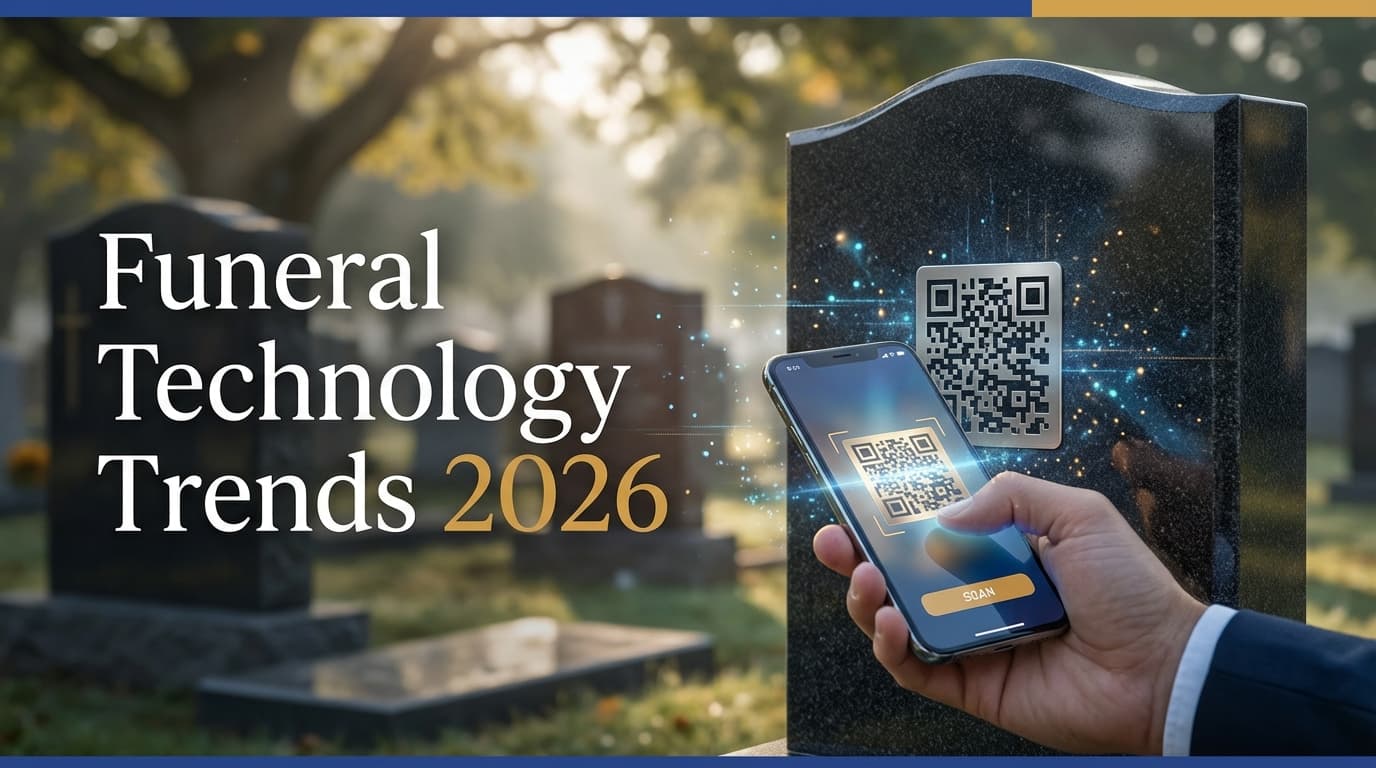
QR code memorials are one of the most accessible and impactful funeral technology innovations available today. By placing a scannable code on a headstone, grave marker, or memorial plaque, families transform a static monument into a gateway to a living digital archive. Visitors simply scan with their smartphone and instantly access photo galleries, recorded eulogies, video messages, life stories, and written tributes. No app required.
Why It Matters: QR code memorials bridge the gap between physical remembrance and digital preservation. They allow families to share unlimited photos, videos, and stories that would never fit on a traditional headstone, creating a multigenerational tribute that grows over time.
Platforms like Linkora are leading this space by offering weather-resistant QR plaques that connect to comprehensive memorial pages, including multimedia tributes, GEDCOM family tree imports, and privacy controls that give families complete ownership over their memorial content. Cemetery administrators are increasingly adapting their policies to accommodate QR code technology, and monument dealers are adding digital memorial services to their product offerings. For a deeper dive, see our complete guide to how QR codes on headstones work.
2. AI-Powered Funeral Planning and Digital Avatars
Artificial intelligence is reshaping digital funeral services in ways that range from practical to profound. On the practical side, AI obituary tools can now auto-generate draft obituaries from a few key details, saving funeral directors hours of writing time. AI chatbots handle basic customer service inquiries, automated scheduling reduces administrative overhead, and predictive analytics help with business planning and inventory management.
On the more emotionally complex side, 2026 has seen a surge in “digital afterlife” technology. Text-based legacy bots trained on a person’s messages and journals allow loved ones to receive replies that sound like the deceased. Voice synthesis technology can preserve a person’s voice for reading bedtime stories or narrating digital memoirs. And high-end memorial services are beginning to offer holographic projections and VR environments where the deceased can be “present” in a digital space.
While some of these applications raise ethical questions that the industry is still working through, AI-powered tools for operational efficiency are becoming mainstream. Funeral professionals who start with the practical applications, such as AI-assisted scheduling, CRM automation, and obituary drafting, can see immediate time savings while staying ahead of the broader trend.
3. Virtual Funeral Services and Live Streaming
Live streaming funeral services exploded during the pandemic, and the numbers show it’s not going away. According to the National Funeral Directors Association, 60.5% of U.S. funeral homes now offer live streaming services, up from just 21.5% in 2019. That’s a near-tripling in adoption over six years, and virtual funeral services continue to grow as families become more geographically dispersed.
of U.S. funeral homes now offer live streaming, up from 21.5% in 2019 (NFDA)
One particularly interesting finding: nearly 20% of people who watch funeral recordings were actually present at the physical service. This suggests that live streaming isn’t just for those who can’t attend. It’s becoming part of the grieving process itself, allowing people to revisit and process the service at their own pace. Platforms like EventLive and OneRoom have emerged as industry leaders, offering clean, high-quality streaming experiences designed specifically for funeral services.
4. Funeral Home Software and Digital Management
Modern funeral home software has evolved from simple record-keeping into comprehensive management platforms. Today’s solutions integrate customer relationship management, scheduling, inventory tracking, and financial reporting into a single dashboard. They automate routine tasks and free up staff to focus on what matters most: caring for families during their most difficult moments.
Key capabilities in leading funeral home software platforms for 2026 include online case management where families can fill out forms and upload documents digitally, integrated payment processing with pre-need and at-need options, digital showrooms featuring 360-degree imaging of burial and cremation options (pioneered by Batesville’s Family Choices system in late 2024), and automated communication workflows that keep families informed throughout the process.
For funeral professionals evaluating software, the focus should be on systems that reduce administrative burden while improving the family experience. The best platforms integrate seamlessly with your existing workflows rather than requiring a complete operational overhaul.
5. Digital Memorial Pages and Online Tributes
Memorial technology has come a long way from simple online obituary listings. Today’s digital memorial platforms offer rich, interactive experiences where families can share photos, videos, audio recordings, life timelines, and written tributes. Visitors can leave condolences, share their own memories, and contribute to a collective portrait of a person’s life. If you’re new to this concept, our guide on what a digital memorial is and how it works covers the basics.
The 33% rise in digital memorial platform usage reflects a fundamental shift in how families want to remember their loved ones. Static, text-only obituaries are giving way to living memorial pages that can be updated, expanded, and visited for generations. Linkora’s platform, for example, connects these digital tributes directly to physical monuments through QR code technology, meaning a visitor at a cemetery can scan a code and instantly access a complete multimedia memorial. It’s a powerful bridge between the physical and digital worlds of remembrance.
6. Eco-Friendly Technology and Green Burial Innovation
With the U.S. cremation rate projected to hit 78% by end of 2026, eco-conscious burial and memorial options are growing fast. Smart cremators now feature cloud-based monitoring systems that allow for remote performance tracking and predictive maintenance, making the cremation process more efficient, safer, and more environmentally controlled.
Beyond cremation, the broader green burial movement is being supported by technology: biodegradable urns with GPS-trackable memorial markers, eco-friendly embalming alternatives, and digital memorial solutions that reduce the need for resource-intensive physical monuments while preserving memories in perpetuity. For families choosing cremation or green burial, meaningful memorial keepsakes and remembrance gifts paired with digital tributes offer a way to honor a loved one that aligns with their environmental values.
7. Blockchain and Digital Legacy Planning
Digital legacy planning is an emerging category within deathtech that addresses a growing need: what happens to our digital lives when we’re gone? Blockchain-based secure data management platforms are entering the death care space, offering immutable storage for important documents, digital assets, and memorial content. Online will-writing platforms and digital estate management tools make it easier for families to plan ahead, and some integrate directly with funeral home pre-need programs.
While still relatively early-stage compared to QR code memorials or live streaming, digital legacy planning represents a significant growth area. Pre-need planning adoption has already surpassed 29% among adults over 55, and as digital native generations begin planning for end-of-life, the demand for comprehensive digital estate tools will only increase.

Key funeral technology trends and statistics shaping the death care industry in 2026.
How Funeral Homes Can Embrace Funeral Technology Today
Adopting funeral home technology doesn’t require a massive budget or a complete digital overhaul. The most successful funeral professionals take an incremental approach, starting with high-impact, low-effort tools and building from there. Here’s a practical roadmap:
Step 1: Start with online visibility and price transparency. If you don’t have clearly displayed service options and pricing on your website, that’s the first gap to close. Families are comparison shopping online before they call, and funeral homes without visible prices are losing prospects to those who are transparent.
Step 2: Add live streaming and digital memorial capabilities. A basic live streaming setup can cost under $500, and the return in customer satisfaction and extended reach is substantial. Partner with a QR code memorial platform like Linkora to offer digital tributes as an add-on service for monument and headstone sales.
Step 3: Evaluate funeral home software. If you’re still managing cases through spreadsheets or paper files, modern CRM-integrated funeral management software can dramatically reduce administrative time. Look for platforms that offer online intake forms, automated family communications, and integrated payment processing.
Step 4: Explore AI tools for efficiency. Start with AI obituary drafting tools and automated scheduling. These practical applications deliver immediate time savings with minimal risk.
Step 5: Develop a digital memorial product line. Whether you’re a funeral home, monument dealer, or cemetery, adding digital memorial services creates a recurring revenue stream and deepens your relationship with families over time. QR code memorial plaques, digital tribute pages, and memorial website hosting are all services that can complement your existing offerings.
The Business Case: Why Funeral Technology Investment Pays Off
The funeral technology conversation isn’t just about staying current. It’s about business sustainability. The U.S. funeral home market faces headwinds from rising cremation rates and shifting consumer preferences, with industry revenue projected to be $23.9 billion in 2026. Businesses that diversify their offerings with grief counseling, digital memorial options, and technology-enabled services are better positioned to withstand ongoing competition and evolving consumer demand.
For Monument Dealers and Cemetery Administrators: Adding QR code memorial services to your product line creates a new revenue category with minimal overhead. Linkora’s partner program is designed specifically for B2B partners looking to offer digital memorial technology to their customers. Learn more about becoming a partner.
Consumers are also increasingly willing to pay for digital services. The rise in pre-need planning, combined with the expectation of digital convenience, means families are actively looking for funeral providers who offer modern, technology-enabled experiences. When you invest in funeral technology, you’re not just buying software. You’re investing in the trust, reach, and long-term relevance of your business.
For families navigating memorial decisions, understanding the options available can help. Our guide on how to write a tribute for someone who passed away offers practical advice that pairs well with the digital memorial tools discussed in this article.