
TL;DR
- A green burial returns the body to the earth naturally, with no embalming, no concrete vault, and only biodegradable caskets or shrouds.
- It typically costs $500 to $5,000 (about $2,600 on average), well below the roughly $8,300 for a conventional burial.
- Interest is climbing fast: 61.4% of people now say they would consider a green funeral, up from 55.7% in 2021.
- There are three certified cemetery types: hybrid, natural burial ground, and conservation burial ground.
- Green burial is legal in all 50 states, and a QR memorial from Linkora can keep the story alive even when the grave marker is a simple stone or a living tree.
What a green burial really means
When most of us picture a burial, we picture the whole familiar sequence: embalming, a polished hardwood casket, a concrete vault lowered into the ground, a granite headstone. A green burial gently sets almost all of that aside. The idea is simple and old, older than the funeral industry itself. The body is laid to rest without chemicals, wrapped in a shroud or placed in a container that will break down completely, and returned to the soil to become part of the landscape again.
For a lot of families, that simplicity is the whole point. There is something deeply comforting about the “dust to dust” rhythm of it, and for people who spent their lives caring about the natural world, it can feel like the most honest goodbye there is. If your family is weighing this against other options, our cremation vs. burial decision guide is a helpful companion read, and this article focuses squarely on the natural burial path.
The Green Burial Council defines a natural burial by three non-negotiables: no embalming, no burial vault, and burial containers or shrouds made only of biodegradable materials. Everything else follows from those three rules.
Why families are choosing it now
Green burial is not a fringe choice anymore. According to the National Funeral Directors Association’s 2025 report, 61.4% of consumers said they would be interested in exploring green funeral options, a meaningful jump from 55.7% in 2021. Two forces are driving that shift: cost and conscience.
of consumers would consider a green funeral (NFDA, 2025)
The environmental case is easier to feel once you see the numbers. Conventional American burials put roughly 5.3 million gallons of embalming fluid into the ground every year, along with about 1.6 million tons of reinforced concrete for vaults, plus steel, hardwood, and copper from caskets. Embalming fluid is mostly formaldehyde and solvents that can leach into soil and groundwater over time. Green burial removes all of it. If you are curious about what embalming actually involves and why some families want to avoid it, our explainer on what embalming is walks through the process plainly.
Then there is the money. A conventional funeral with burial averaged about $8,300 in recent years, and cremation with a service around $6,280. A green burial usually lands between $500 and $5,000, with an average near $2,600. The savings come from what you leave out: no embalming, no vault, no elaborate casket. You can compare these figures against our full breakdowns of cremation costs and coffin and casket prices to see where the difference really adds up.
The three types of green cemeteries
Not every “green” cemetery is the same, and knowing the difference helps you set expectations. The Green Burial Council certifies three categories, each greener than the last.
| Type | What it is | Best for |
|---|---|---|
| Hybrid | A section of a traditional cemetery set aside for green burials, with no vaults and biodegradable containers only. | Families who want a natural burial close to home, in a familiar cemetery. |
| Natural burial ground | A standalone cemetery where every burial is natural: no chemicals, no vaults, biodegradable materials throughout. | Those who want a fully natural setting rather than a single green section. |
| Conservation burial ground | Meets all natural-ground standards and is run by a government agency or non-profit, protected by both burial and conservation law. | Families who want their loved one’s resting place to permanently protect wild land. |
Conservation burial grounds are the purest form. The burial fee helps fund the permanent protection and restoration of natural habitat, so a loved one’s final act is, in a real sense, saving a piece of the earth. A GBC-certified site has been checked against third-party standards for materials, land management, and restricted use of herbicides, pesticides, and fertilizers, so certification is worth asking about when you tour a location.
What actually happens at a green burial
The process is quieter and more hands-on than a conventional funeral, and many families find that involvement healing rather than daunting. Instead of embalming, the body is kept cool with refrigeration or dry ice until the burial, which usually happens within a few days. There is no chemical preparation.
For the container, families choose from unfinished pine or other soft-wood caskets, woven wicker or bamboo caskets, or a simple cloth shroud made of natural fiber like cotton, linen, or wool. Some grounds allow burial with no container at all. If a shroud appeals to you, our complete guide to burial shrouds covers materials, cost, and how they are used. And because green burial skips the concrete liner entirely, it helps to understand what a burial vault is and why natural cemeteries do not permit one.
Families are often invited to help lower the body, fill the grave by hand, and place natural memorials like wildflowers or a fieldstone. For many, taking part in the burial itself becomes one of the most meaningful moments of the whole goodbye.
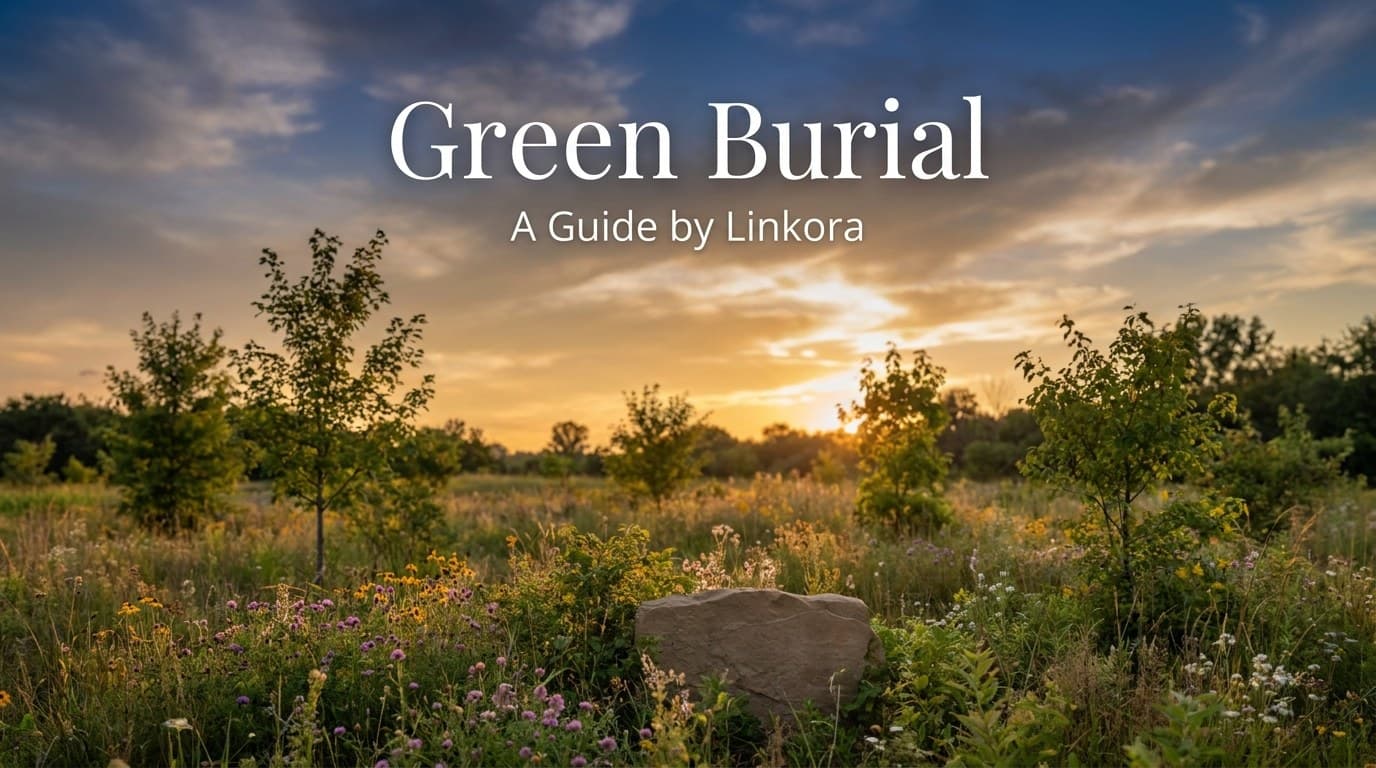
Graves are frequently marked with a flat native stone, an engraved boulder, or a planted tree or shrub rather than a raised headstone, so the land keeps its wild character. If you like the idea of a subtler marker, our roundup of headstone ideas and designs includes natural and low-profile options that suit green settings.

Green burial versus conventional burial at a glance.
How green burial compares to other eco-minded options
Green burial is not the only environmentally gentle choice, and it helps to see it beside the alternatives. Water cremation, also called aquamation, uses water and alkali instead of flame and has a notably smaller carbon footprint than fire cremation; our water cremation guide explains how it works and where it is available. Traditional flame cremation is widely accessible and inexpensive, though it does release carbon and, if a family later scatters or keeps the ashes, our guide to what to do with cremation ashes offers meaningful ideas.
Where green burial stands apart is the sense of return: the body becomes soil and, in a conservation ground, actively protects wild land. It is worth knowing the vocabulary too, since terms like interment come up on paperwork and at the graveside. If any of it is unfamiliar, our short explainer on what interment means clears it up in a minute.
Is green burial legal, and is it right for your family?
Yes. Green burial is legal in all 50 states. What varies is availability. Certified natural and conservation grounds are still concentrated in certain regions, so families in some areas may need to travel or choose a hybrid section of a nearby cemetery. Embalming is almost never legally required either; it is a choice, not a mandate, in the vast majority of situations.
Green burial tends to fit families who value simplicity, want a lighter environmental footprint, feel comfortable with a hands-on farewell, and appreciate the lower cost. It may feel like less of a match if your family strongly wants an open-casket viewing that requires embalming, or if the nearest natural ground is impractically far. There is no wrong answer here, only the one that feels true to the person you are honoring.
How to plan a green burial: a simple roadmap
If you are arranging this now, or thinking ahead for yourself, these steps keep things manageable during an emotional time.
- Find a green-friendly cemetery. Search the Green Burial Council’s directory for hybrid, natural, or conservation grounds near you, and ask each one about certification and rules.
- Choose a funeral home that supports it. Many funeral directors now offer green packages; a good one will handle refrigeration and paperwork without pushing embalming. Our guide to working with a funeral director covers the questions worth asking.
- Pick a biodegradable container or shroud. Decide between a soft-wood casket, a woven casket, or a natural shroud based on your budget and the ground’s requirements.
- Handle permits and timing. Because there is no embalming, burial usually happens within a few days. Your funeral home will manage the death certificate and any local permits.
- Plan the gathering and the marker. A graveside service, a hand-filled grave, and a planted tree or native stone all work beautifully. Our celebration of life guide and funeral planning checklist help you organize the day.
Keeping the story alive when the marker is a stone or a tree
One quiet trade-off of green burial is that the grave is deliberately understated. A flat fieldstone or a young tree does not carry a name, dates, an epitaph, or the thousand small details that make a life. That is exactly where a digital memorial becomes so valuable. With Linkora, a small weatherproof QR code can be etched into that natural marker or set on a nearby plaque, and anyone who scans it, no app required, is taken to a full digital memorial page with photos, video, stories, and even a family tree.
It is the best of both worlds: the land stays wild and simple, while the memories stay rich and reachable for generations. Families keep complete control over what is shared and who can see it, so a natural resting place can hold a living, growing tribute without a single extra ounce of stone. You can explore how it looks on our features page or see a real example first.
Frequently asked questions
How much does a green burial cost?
Green burials typically range from $500 to $5,000, with an average around $2,600. That is well below the roughly $8,300 average for a conventional burial, mostly because you skip embalming, a concrete vault, and an elaborate casket.
Is embalming required for burial?
In almost all cases, no. Embalming is a choice rather than a legal requirement in the vast majority of situations. Green cemeteries refrigerate the body instead and bury within a few days, which is why the process avoids chemicals entirely.
Is green burial legal in the United States?
Yes, green burial is legal in all 50 states. The main limitation is availability, since certified natural and conservation cemeteries are still concentrated in certain regions. Many families use a hybrid green section of a nearby traditional cemetery.
What is the difference between hybrid, natural, and conservation cemeteries?
A hybrid cemetery sets aside a green section within a traditional one. A natural burial ground is a standalone site where every burial is chemical-free and vault-free. A conservation burial ground meets those same standards and is run by a government agency or non-profit, permanently protecting the land.
How do you mark and remember a green grave?
Green graves are usually marked with a flat native stone, an engraved boulder, or a planted tree rather than a raised headstone. A QR memorial from Linkora can be added to that natural marker so visitors can scan it and reach a full digital tribute with photos, stories, and family history.
Are you a monument dealer, funeral home, or cemetery exploring natural burial and digital memorials? Linkora partners with providers to add QR memorial services alongside green offerings. Become a partner to learn more.