
TL;DR
- What is a death doula? A trained, non-medical companion who supports a dying person and their family emotionally, practically, and spiritually, before, during, and after death.
- Doulas do not replace hospice. Hospice manages pain and clinical symptoms; a doula manages presence, planning, family dynamics, and meaning.
- Expect roughly $25 to $150 per hour, or flat packages of about $500 to $5,000. Medicare and most insurance do not cover it, though sliding scales are common.
- The profession is unregulated. No state requires a license, so credentials such as the NEDA Proficiency Badge and INELDA training are voluntary signals, not guarantees.
- Much of a doula’s work is legacy work: recording stories, letters, and photos. That material is exactly what belongs on a digital memorial page once the funeral is over.
The Quiet Job Nobody Told You Existed
If you have ever sat beside a hospital bed at two in the morning wondering whether you should call someone, say something, or simply keep holding a hand, you have already felt the gap that this role exists to fill. So what is a death doula? In the simplest terms, a death doula is a trained non-medical companion who walks alongside a dying person and their family through the final months, weeks, and hours of life, and often through the disorienting first weeks afterward.
The role is not new in spirit. Families, neighbours, and faith communities have done this work for centuries. What is new is that it has a name, a growing professional community, and a place in the modern death care landscape. Membership in the National End-of-Life Doula Alliance grew from roughly 260 people in 2019 to more than 1,600 by 2024, spanning all fifty states. INELDA, one of the largest training bodies, reports certifying somewhere around 8,000 doulas worldwide since its founding.
Part of what is driving this is geography. Home has overtaken the hospital as the most common place of death in the United States. CDC data showed home deaths rising to 31.4% while hospital deaths fell to 35.1%, and the curves have continued to converge since. More dying happens in living rooms now, which means more of the work falls to families who have never done it before.
This guide covers what a death doula does day to day, how the role differs from hospice, what it costs, how to vet someone, and what happens to all the stories and recordings a doula helps a family gather. If you are earlier in the process and still sorting out paperwork and decisions, our end-of-life planning checklist is a better starting point, and our guide to hospice at home covers the clinical side of the same weeks.
What Is a Death Doula, Exactly?
The word doula comes from Greek, roughly meaning a woman who serves. It entered modern usage through birth work, and the end-of-life version borrows the same idea: a steady, non-clinical presence whose entire job is the human experience of the event rather than its medical management. You will see the role called a death doula, an end-of-life doula, a death midwife, a transition guide, or a soul midwife. The titles differ by training lineage more than by function.
What a death doula is
- A translator. Doulas explain what the body is doing as it shuts down, in plain language, before it frightens anyone. Knowing that the death rattle is not suffocation, or that a burst of alertness days before death is normal, changes what a family remembers about that week.
- A planner. They help design the vigil: who is in the room, what music plays, whether the window stays open, which rituals matter, what the dying person asked for while they could still ask.
- A witness. Someone whose only assignment is to be present and unhurried, which is a genuinely rare thing in a house full of exhausted relatives and rotating clinicians.
- An archivist. Life review, letters to grandchildren, voice recordings, photo sorting, the story behind the scar on the left hand. This is the part families almost never get to on their own.
What a death doula is not
A doula does not administer medication, change dressings, diagnose anything, or make medical recommendations. They do not sign death certificates or handle the body after death, although some are also trained home funeral guides. They are not a replacement for a hospice team, a social worker, or a therapist, and any doula who suggests otherwise is a doula to walk away from.
A useful way to hold the distinction: hospice looks after the body, and the doula looks after everything happening around the body. The room, the relationships, the pacing of decisions, and the story.
What a Death Doula Actually Does, Phase by Phase
Doula work is usually described in three phases. Not every family uses all three, and many hire a doula only for the last one.
Phase one: the months before
This is the longest and least visible phase, and arguably the most valuable. A doula meets the dying person while they can still direct things. Work in this phase typically includes life review conversations, mapping out what a good death would look like for this specific person, sorting through unfinished business and estrangements, and walking families through advance directives and care preferences. Doulas frequently help families avoid the trap of discovering, in a hospital corridor, that nobody knows what Dad wanted.
This is also when anticipatory grief tends to hit hardest, and a doula is often the first person to name it out loud. Our guide to anticipatory grief covers why mourning someone still alive is normal rather than disloyal.
Phase two: the vigil
The vigil is the active dying period, usually the final days and hours. A doula may sit through the night so family members can sleep, manage who comes into the room, keep the environment calm, coach relatives on what to say and when silence is better, and handle the small logistics that otherwise fall on the person least able to carry them. Many doulas offer respite specifically so a spouse can shower, eat, and step outside without feeling they have abandoned their post.
Phase three: the weeks after
Post-death support varies most between practitioners. It can include sitting with the family in the first hours, explaining what happens next, helping notify people, accompanying the family to the funeral director, or helping shape a celebration of life. Some doulas continue grief companionship for months. Most will hand off to a bereavement counsellor when the work becomes clinical, and our guide to grief counseling explains where that line usually sits.

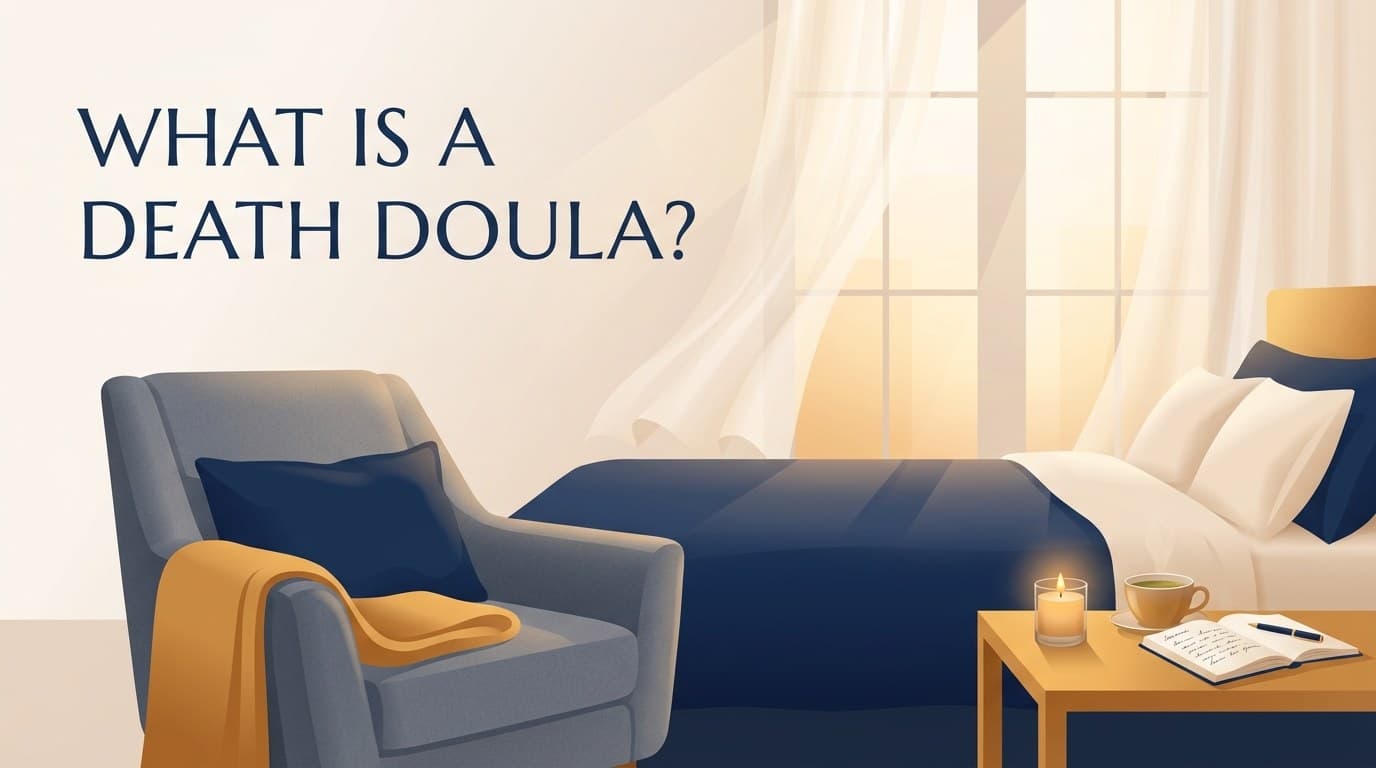
The death doula role at a glance: three phases of support, how it differs from hospice, and what families typically pay.
Death Doula vs Hospice: The Difference That Actually Matters
This is the question families ask first, usually because someone has told them they cannot have both. They can, and the two roles were never in competition.
| Hospice | Death doula | |
|---|---|---|
| Primary focus | Medical comfort, pain and symptom management | Emotional, practical, spiritual, and logistical support |
| Who provides it | Licensed nurses, physicians, aides, chaplains, social workers | Trained non-medical companion, usually independent |
| When it starts | Typically at a prognosis of six months or less | Any time, sometimes years ahead of death |
| Time in the home | Scheduled visits, often a few hours per week | Flexible, including overnight vigil hours |
| Who pays | Medicare, Medicaid, most private insurance | Private pay, out of pocket |
| Regulation | Federally regulated and certified | Unregulated, voluntary credentials only |
| After death | Bereavement support for up to 13 months | Varies widely by practitioner and package |
The strongest arrangement is both. The hospice nurse makes the body more comfortable while the doula makes the room, the relationships, and the pace of decisions more manageable. A growing number of hospices now run their own doula programs, and some, such as Alive Hospice in Nashville, have launched formal doula specialist certification cohorts in partnership with training institutes.
What Does a Death Doula Cost?
Pricing is the second question families ask, and the honest answer is that it varies more than almost anything else in death care. There is no fee schedule and no insurance benchmark holding rates in place.
Typical hourly range, averaging around $85 per hour
| Pricing model | Typical range | What it usually covers |
|---|---|---|
| Hourly | $25 to $150 | Ad hoc visits, planning sessions, respite hours |
| Vigil day rate | $200 to $400 | Extended presence during active dying, often overnight |
| Full package | $500 to $5,000 | Planning, legacy work, vigil, and post-death follow-up |
| Sliding scale or pro bono | Varies | Widely offered; ask directly, most doulas will not volunteer it |
Rates skew higher in large metros, where $80 to $100 per hour is common. Neither Medicare nor Medicaid nor most private insurance covers doula services, so this is out-of-pocket spending in a period when families are already absorbing other costs. For context on where the rest of the money goes, see our breakdowns of what a funeral actually costs and cremation pricing.
Ask about sliding scales, community doula collectives, and hospice-affiliated volunteer doula programs before assuming the cost is out of reach. A meaningful share of doula work in the United States is done at reduced or no cost, and many practitioners reserve a set number of pro bono cases each year.
Training, Certification, and What the Credentials Really Mean
Here is the part families need to hear plainly: the death doula profession is unregulated. No state requires a licence. No federal body oversees training programs. Anyone can print a card tomorrow and call themselves a death doula.
That does not mean credentials are meaningless, only that they are voluntary signals rather than legal guarantees. The ones worth recognising:
- NEDA Proficiency Badge. Issued by the National End-of-Life Doula Alliance. Requires membership in good standing and a timed 90-minute assessment across eight competency areas including the dying process, non-medical comfort care, communication, confidentiality, grief, and Medicare hospice regulations. Passing mark is 85%.
- INELDA training and certification. The International End of Life Doula Association runs one of the longest-established curricula and a separate certification track beyond initial training.
- Program certificates. Doulagivers, Going with Grace, Lifespan Doulas, and university-affiliated programs each issue their own certificates. These vary enormously in depth, from a weekend workshop to many months of supervised practice.
Hospice News reported in 2026 on an active debate within the field over standardisation, driven partly by doulas moving into funeral and after-death care, which touches existing state funeral regulation. Expect the credentialing picture to tighten over the next few years. For now, the burden of vetting sits with the family.
How to Find and Vet a Death Doula
Start with the NEDA and INELDA public directories, then ask your hospice team, whose social workers usually know who in the area is reliable. Local hospice volunteer coordinators, palliative care teams, hospital chaplains, and funeral directors are all reasonable referral sources.
Questions worth asking in the first call
- What training have you completed, and do you hold the NEDA Proficiency Badge or another certification?
- How many families have you supported through an actual death, not just planning?
- What exactly is included in your package, and what is billed separately?
- What is your availability during active dying, including overnight, and what happens if you are with another family?
- Do you have a backup doula, and will we meet them in advance?
- How do you work alongside a hospice team?
- Do you offer a sliding scale?
- What do you do with recordings, letters, and photos we create together, and who owns that material?
That last question matters more than most families realise, and it leads directly to the next section.
Where the Legacy Work Goes Next
Ask any experienced doula what families thank them for years later and very few will say the vigil logistics. They say the recordings. The afternoon someone finally asked Grandma about the boat she grew up on. The letter written to a granddaughter who was six at the time and will read it at twenty-six.
The problem is what happens to that material afterward. Voice memos sit on a phone that gets upgraded. Letters go into a box in a basement. Photos stay in one sibling’s cloud account, invisible to everyone else in the family. The most meaningful work of the final months quietly becomes the least accessible.
This is the gap Linkora was built for. A digital memorial page gives that material a permanent, shared home, and a QR code etched into the headstone or memorial plaque connects the physical marker to it. A grandchild standing at the grave in 2050 scans a code and hears the voice. No app to install, nothing to download, no login required for visitors.
- Upload the audio and video a doula helped record, alongside photos and written tributes. Families on Linkora have preserved more than 12,000 photos to date.
- Import a family tree via GEDCOM so the stories sit inside the wider lineage rather than floating alone.
- Control exactly who sees what. The platform is privacy-first, and the family caretaker decides visibility, contributors, and permissions.
- Invite relatives to add their own memories over time, so the page grows instead of freezing on the day it was made.
If you want to see how this looks in practice before deciding anything, browse real memorial examples or read our walkthrough of how to create a digital memorial page. If the doula work is still ahead of you, our digital legacy planning guide covers what to gather while there is still time to gather it, and the end-of-life planning binder gives you somewhere to put it.
For Hospices, Funeral Homes, and Cemeteries
The doula movement is reshaping expectations on the professional side too. Families who have worked with a doula arrive at the funeral home already holding recordings, letters, and a clear sense of what the person wanted. They expect the provider to have somewhere to put all of it, and a printed program does not answer that.
Monument dealers, funeral directors, and cemetery administrators are increasingly adding digital memorial services for exactly this reason. If you are evaluating how a QR memorial offer fits alongside doula referrals in your market, our monument dealer program and 2026 funeral technology trends cover the commercial picture, and the funeral home partner program covers how the arrangement works.
Frequently Asked Questions
Does Medicare pay for a death doula?
No. Medicare, Medicaid, and most private insurance plans do not cover death doula services, because doulas are non-medical providers outside the regulated hospice benefit. Families pay out of pocket. Some hospices offer volunteer doula programs at no charge, and many independent doulas run sliding-scale or pro bono slots, so it is always worth asking.
How is a death doula different from hospice?
Hospice is a regulated medical benefit delivered by licensed clinicians who manage pain and symptoms, usually starting at a prognosis of six months or less. A death doula provides non-medical support: emotional presence, vigil planning, family communication, legacy work, and overnight companionship. They are complementary rather than alternative, and most doulas prefer working alongside a hospice team.
What qualifications do you need to be a death doula?
Legally, none. The profession is unregulated and no state requires licensure. In practice, most working doulas complete a training program through organisations such as INELDA, Doulagivers, or Lifespan Doulas, and many hold the NEDA Proficiency Badge, which requires passing a 90-minute assessment across eight competency areas with a score of 85% or higher.
When should a family hire a death doula?
Earlier than most people do. Families who bring in a doula at the point of a terminal diagnosis get the full benefit of life review, legacy recordings, and preference planning while the dying person can still participate. Hiring during active dying still helps enormously with vigil support and respite, but the planning and storytelling window has usually closed by then.
Do death doulas handle the body or the funeral?
Generally no. Standard doula scope ends at emotional and logistical support. Some doulas hold additional home funeral guide training and can advise on home vigils and after-death body care where state law permits it, but arranging the funeral, transport, and disposition remains the funeral director’s role. Ask any doula directly where their scope stops.
Is a death doula the same as an end-of-life doula?
Yes. Death doula, end-of-life doula, death midwife, transition guide, and soul midwife all describe the same role. The naming usually reflects which training lineage the practitioner came through, or simply which term they find gentler to say to a frightened family.
What happens to the recordings and letters a doula helps create?
That is up to the family, and it is worth deciding before the material exists. Ask your doula who holds the files and in what format. Many families move the audio, video, photos, and written tributes onto a permanent digital memorial page afterward, which keeps everything in one place, lets relatives add to it over time, and can be linked to a QR code on the headstone or memorial plaque.
This article is general information, not medical, legal, or financial advice. Death doula scope, home funeral rules, and after-death care law vary by state. Confirm details with your hospice team, funeral director, or a licensed professional in your jurisdiction.