
TL;DR — Casket vs Coffin, at a Glance
- The clearest difference is shape. A coffin has six or eight sides and tapers to follow the body, wider at the shoulders and narrow at the feet. A casket is a simple four-sided rectangle.
- Their lids differ too. A coffin usually has a flat lid that lifts off completely, while a casket has a hinged lid, often split in two so the top half can open for a viewing.
- Caskets tend to cost more because they use more material and offer more customization, with padded interiors and decorative hardware. Basic coffins can start near $500, while entry-level caskets usually begin around $1,000.
- The words also split by geography. “Casket” is the common term in the United States, while most of the rest of the English-speaking world says “coffin.”
- Whichever you choose, the container marks where a loved one rests. A QR code memorial lets you tell the fuller story of who they were, far beyond what fits on a marker.
Two Words for the Same Quiet Purpose
When a family sits down to plan a burial, one of the first choices they face comes wrapped in a small confusion of words. Some people say casket, some say coffin, and many use the two as if they mean exactly the same thing. They are closely related, and in everyday conversation the difference rarely matters. But the two are not identical, and if you are making arrangements for someone you love, understanding what sets them apart can make a hard decision feel a little clearer.
This guide walks through the real casket vs coffin difference: how their shapes and lids differ, what each is made of, how much they typically cost, and why the words themselves changed over time and across countries. If you are early in the planning process, our step-by-step funeral planning checklist is a steady companion to keep alongside this one.
The Short Answer: What’s the Difference?
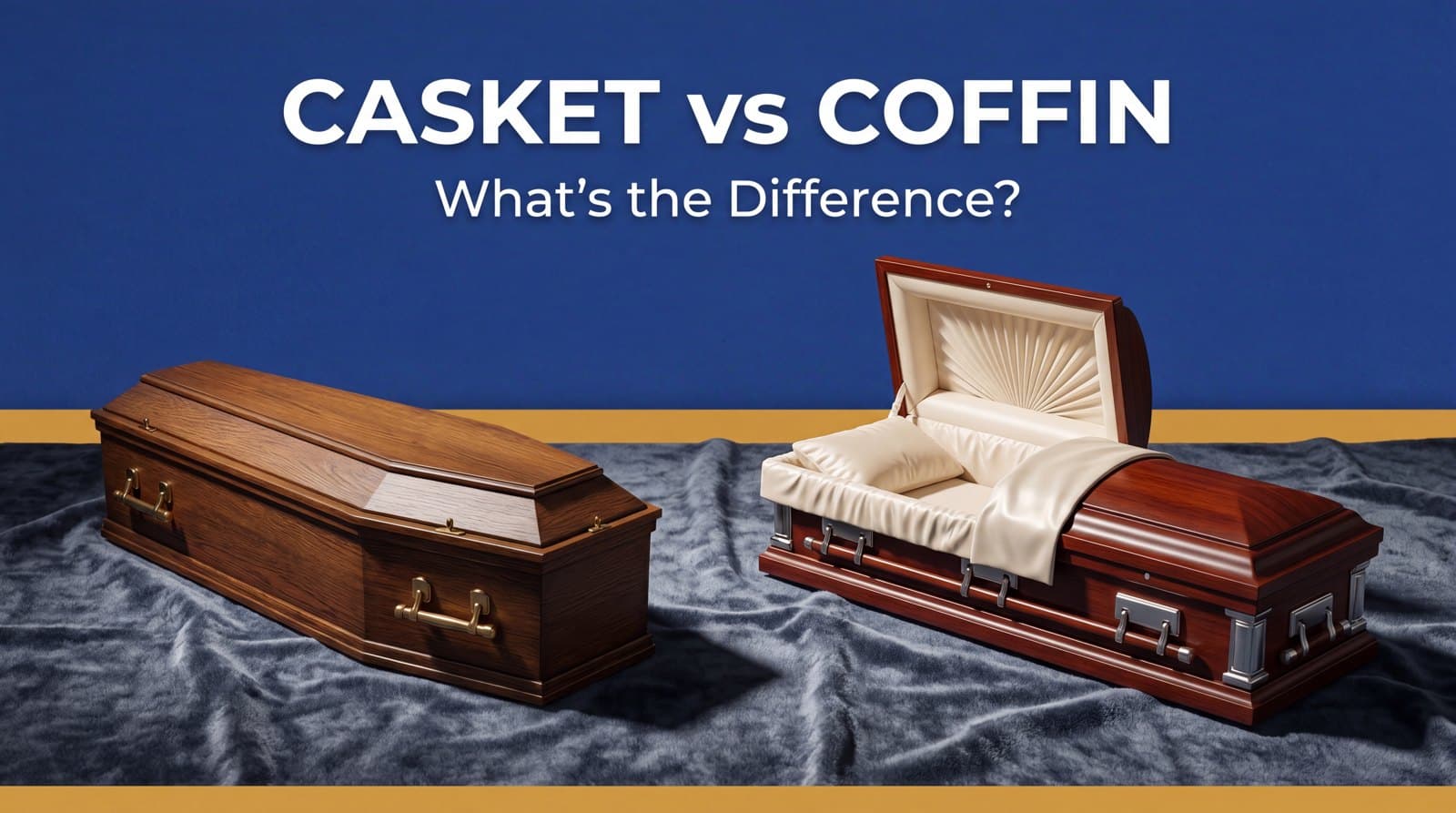
A coffin is a burial container with six or eight sides that tapers to fit the shape of the human body. It is broad across the shoulders and narrows toward the feet, with a flat lid that lifts away. A casket is a four-sided rectangular container with straight, even sides and, almost always, a hinged lid that swings open rather than lifting off.
That one difference in shape is the heart of the casket vs coffin distinction, and it leads to nearly everything else. Because a casket is rectangular, it has more room for padded interiors, decorative hardware, and the kind of finishing that makes an open viewing feel formal and dignified. Because a coffin is tapered, it uses less material and tends to be plainer and less expensive. In the United States the rectangular casket has become the default, which is why many Americans use “casket” for any burial container at all, even a true tapered coffin.
Quick test: Count the sides. Six or eight sides with a tapered, shoulder-wide shape means a coffin. Four straight sides in a clean rectangle means a casket. If the lid lifts off entirely, lean coffin. If it is hinged and swings open, lean casket.
Shape and Construction
Shape is where the two part ways most visibly, and it is the detail funeral directors point to first.
The coffin: tapered to the body
A traditional coffin is anthropoid, meaning it is built to echo the outline of a person. It widens at the shoulders and tapers toward the head and the feet, giving it that familiar six-sided silhouette so often seen in older illustrations and films. This shape is centuries old and was, for a long time, simply how burial containers were made. Because the form follows the body, it requires less wood and fewer materials, which keeps both the weight and the price down.
The casket: a clean rectangle
A casket is a straightforward rectangular box, the same width from head to foot. The even shape gives manufacturers more surface to work with, so caskets often feature richer detailing: rounded or squared corners, ornamental handles called swing bars, and a fully finished exterior. The rectangular form also creates a more spacious, formal frame for a viewing, which is part of why it became the standard for American funerals.
A classic coffin has six (sometimes eight) tapered sides; a casket has four straight ones. That single difference shapes the lid, the cost, and the look of each
The Lid: Lift-Off vs Hinged
The lid is the second giveaway. A coffin’s lid is typically flat and removable, lifted off in one piece when needed and set in place for burial. A casket’s lid is hinged so it can swing open, and it is frequently built as a “half-couch” design, split across the middle. With a half-couch casket, the upper half can be raised on its own for an open-casket viewing while the lower half stays closed, a feature families often value during a service. A “full-couch” casket has a single lid that opens to reveal the whole interior.
Materials and Interior
Both caskets and coffins are made from a similar range of materials, most commonly wood or metal. Wooden options include oak, maple, mahogany, pine, and poplar, while metal versions are usually steel, stainless steel, bronze, or copper. Eco-friendly choices such as bamboo, wicker, or biodegradable board are increasingly available for families drawn to a greener burial, and these often take the simpler coffin form.
Where they differ is in finishing. Caskets are generally more elaborate inside, lined with padded or quilted fabric like satin, velvet, or crepe, and fitted with a pillow and a soft mattress base. Coffins, in keeping with their plainer tradition, tend to use lighter linings and simpler hardware. Neither approach is more respectful than the other. The right choice is the one that fits the family’s wishes, faith, and budget, much like the decisions covered in our cremation vs burial guide.
Casket vs Coffin: The Key Differences
Here is how the two compare across the details families weigh most when making a choice.

A side-by-side look at how caskets and coffins differ, and where they overlap.
Casket vs Coffin Cost: How Much Does Each One Run?
Price is often the deciding factor in the casket vs coffin question, and here the coffin’s simpler build gives it an edge.
Coffin prices
Coffins use less material thanks to their tapered shape, so basic models can start around $500 and generally range up to a few thousand dollars for premium hardwoods. Simple pine or biodegradable options sit at the lowest end, making the coffin the budget-friendly side of the casket vs coffin choice.
Casket prices
Caskets, with their larger rectangular form and richer finishing, usually begin near $1,000, and most families spend somewhere between $2,000 and $5,000. High-end metal caskets in bronze or copper, or elaborate hardwoods like mahogany, can climb well past $10,000.
Material drives much of the difference. Simple pine or biodegradable options sit at the low end, hardwoods such as oak and maple in the middle, and bronze or copper at the top. For a full breakdown of pricing and ways to keep costs reasonable, see our detailed coffin cost guide, which walks through every price tier.
Know your rights: Under the FTC Funeral Rule, you can buy a casket or coffin from any third-party seller, and the funeral home must accept it and use it without charging an extra handling fee. Comparing prices before you commit can save families hundreds, sometimes thousands, of dollars.
Where the Words Come From
The terminology has its own quiet history, and it explains why the same object goes by two names.
Coffin: the older word
“Coffin” is the older term, with roots in the Old French cofin and the Greek kophinos, meaning a basket or box. For most of history it simply described the container that held the dead, and across the United Kingdom, Ireland, Australia, and much of the world, it still does.
Casket: the gentler American term
“Casket” originally meant a small, fine box for holding jewelry or other valuables. In nineteenth-century America, the funeral trade began using it for burial containers as a softer, more comforting word, treating the body as something precious to be protected. The change was not universally welcomed at the time, but it stuck, and today “casket” is the standard term in the United States. In some countries the two words still mark a real distinction: coffin for the burial container, casket for a decorative keepsake box.
Which Should You Choose?
When it comes to the casket vs coffin decision, there is no single right answer, only the one that suits your loved one and your family. A few questions can guide the choice.
What was their style? Some people would have wanted something traditional and ornate, while others would have preferred simple and understated. The container can be a quiet reflection of how they lived. What does your faith or culture call for? Many traditions have specific guidance on materials and ornamentation, and a simple plain coffin is the expectation in several of them. Will there be an open viewing? If so, a half-couch casket makes that easier. What is your budget? A coffin is usually the more economical choice, and an eco-friendly option can be both gentle on the earth and on the wallet.
It also helps to think about the wider arrangements at the same time, from the burial vault that surrounds the container in the ground to the headstone or marker that will stand above it. If cremation is part of the conversation, our guide to cremation urns covers the containers used in that path instead.
Honoring a Life Beyond the Box
Whether you choose a coffin or a casket, the container does one simple thing: it marks where someone rests. What it cannot do is hold the story of who they were. A name and two dates, carved on a marker above the ground, were for centuries the only record most families could leave behind.
That is finally changing. Families today are pairing the traditional choice with a QR code memorial, a small code placed on or beside the headstone that any visitor can scan with a phone, no app required, to open a full digital memorial of photos, videos, and stories. It works just as well in a centuries-old churchyard as in a modern memorial park, which is one reason the line between a cemetery and a graveyard matters less than the memory itself.
With a platform like Linkora, you can create a digital memorial page that turns a resting place into a living tribute. You decide who can view and contribute, the memories stay private and protected, and the same code can sit on a headstone, a plaque, or a memorial card. If you are deciding what to include, our guide to what to put on a memorial web page is full of ideas.
Monument dealers, funeral homes, and cemeteries can offer QR code memorials to every family they serve. If that is you, our partner program makes it simple to add as a service, alongside the caskets and coffins you already provide.
Frequently Asked Questions About Caskets and Coffins
What is the main difference between a casket and a coffin?
The main difference is shape. A coffin has six or eight sides and tapers to follow the body, wider at the shoulders and narrow at the feet, with a flat lid that lifts off. A casket is a four-sided rectangle with a hinged lid that swings open. Caskets also tend to have more ornate, padded interiors and cost more.
Are casket and coffin the same thing?
In casual conversation, especially in the United States, the two words are used interchangeably and people will understand you either way. Technically they describe different shapes: a tapered six-sided coffin versus a rectangular four-sided casket. Both serve the same purpose as a burial container.
Which is more expensive, a casket or a coffin?
Caskets are usually more expensive. Their larger rectangular form uses more material and allows for padded interiors and decorative hardware. Basic coffins can start around $500, while entry-level caskets often begin near $1,000, with most families spending between $2,000 and $5,000 and premium models costing far more.
Why do Americans say casket instead of coffin?
In the nineteenth century, the American funeral trade adopted “casket,” a word that originally meant a fine box for jewelry or valuables, as a gentler way to describe a burial container. It treated the body as something precious to be protected. The term took hold and is now standard in the United States, while most other English-speaking countries still say “coffin.”
Can I buy a casket or coffin from somewhere other than the funeral home?
Yes. Under the FTC Funeral Rule in the United States, you can purchase a casket or coffin from any third-party seller, including online retailers, and the funeral home must accept it and use it without charging a handling fee. Comparing prices before you buy can save a significant amount.