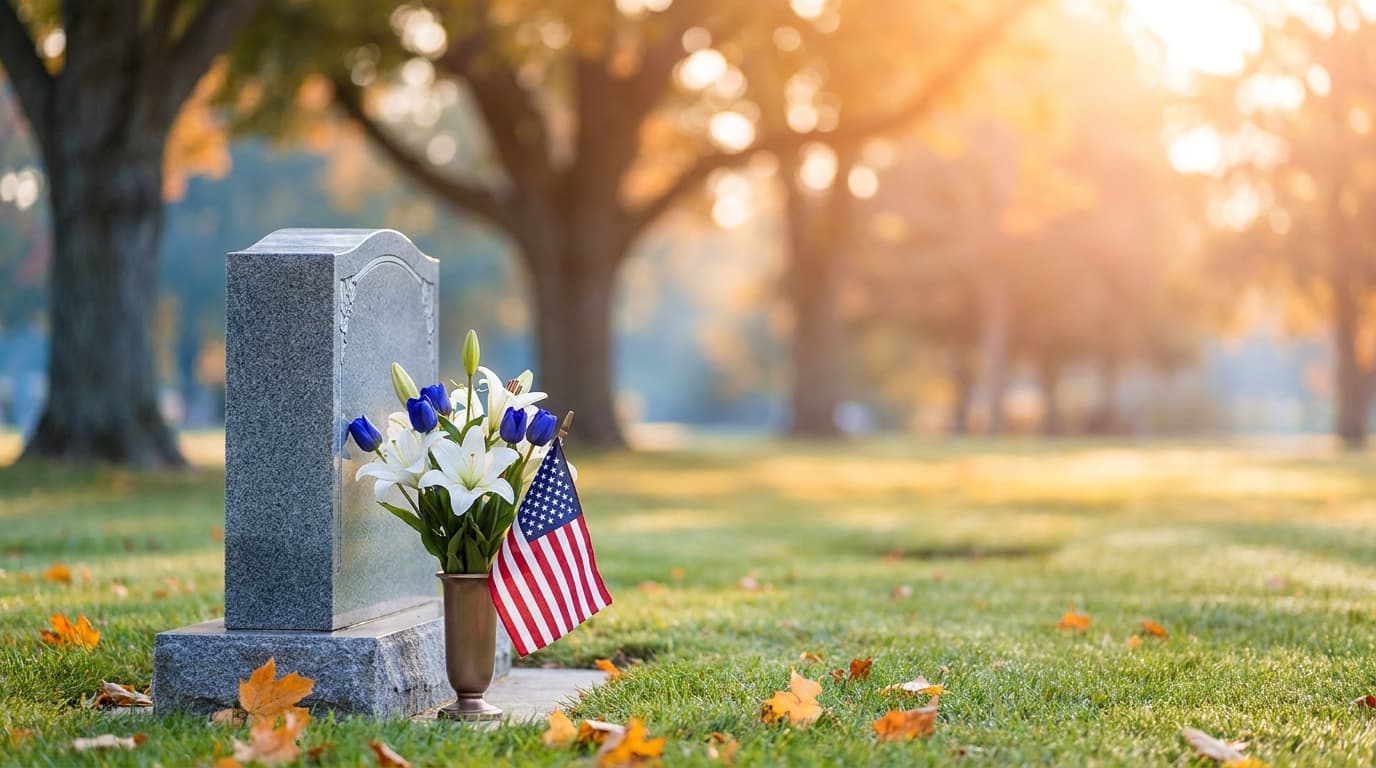

TL;DR
- Check the cemetery’s rules before you buy anything. Memorial parks with flat markers usually allow only flush vases and small items, while cemeteries with upright headstones permit larger arrangements, saddles, and permanent vases.
- Fresh and artificial flowers are almost always allowed in an approved vase. Glass, ceramics, statues, solar lights, and shepherd’s hooks are the items most often banned, and staked decorations are frequently removed on sight.
- Groundskeepers clear wilted flowers and off-season items on a set schedule, often every Tuesday or Friday. Nothing you place is permanent, so plan for weather, mowing, and seasonal cleanups.
- Seasonal decorating keeps a grave feeling tended year-round — pastel blooms in spring, sunflowers in summer, chrysanthemums and small pumpkins in fall, evergreen wreaths and battery candles in winter.
- Flowers fade; the story does not have to. Families increasingly pair physical decorations with a QR code memorial on the marker, so anyone who visits can scan and reach photos, video, and tributes that outlast any bouquet.
Why We Decorate Graves at All
There is an instinct that shows up almost the moment the funeral is over: the need to bring something back to the grave. A handful of flowers, a small flag, a stone set on the marker, a wreath at Christmas. It is one of the oldest human gestures there is, and it long predates the modern cemetery. Decorating a resting place is how we keep visiting a relationship that has changed rather than ended.
In the United States the ritual has a specific root. After the Civil War, communities began gathering each spring to lay flowers on soldiers’ graves, a practice that became known as Decoration Day. On May 30, 1868, some 5,000 people decorated more than 20,000 graves at Arlington in the first national observance, and the custom eventually grew into the Memorial Day we mark today. What began as honoring the war dead became a broader habit of tending every grave, and that habit is why cemeteries fill with color every spring.
This guide covers the practical side that no one hands you at the funeral home: what you are actually allowed to place on a grave, what gets removed and why, how to decorate for each season without breaking the rules, and how to make a resting place feel personal rather than generic. If you are still choosing the marker itself, our guides to grave markers and modern headstone ideas pair naturally with everything below.
What Counts as a Cemetery Decoration
“Cemetery decorations” is a broad category that covers anything a family places at a grave to honor the person and mark the seasons. In practice it falls into a few groups: fresh and artificial flowers, wreaths and grave blankets, flags and military markers, seasonal and holiday items, and small personal tokens such as photos, figurines, or a stone left by a visitor. Some of these are welcome almost everywhere. Others are restricted or banned outright, and the difference usually comes down to safety and mowing.
The single biggest factor is the type of cemetery you are dealing with, and that is dictated by the marker. A traditional cemetery with upright headstones tends to allow more — larger bouquets, flower saddles that drape over the top of the stone, permanent vases attached to the monument. A memorial park designed around flat, flush-to-the-ground markers is built for open-lawn mowing, so it restricts decorations to small designated vases and clears the lawn far more aggressively. Before you spend a dollar, find out which kind you have.
The one rule that overrides every list below: every cemetery sets its own regulations, and they are legally allowed to remove anything that violates them. The guidance in this article reflects what is common across most American cemeteries, but it is not a substitute for the specific rules of the place where your loved one rests. Ask the office for a written copy, or look for it on their website, before you decorate.
What Is Usually Allowed
Most cemeteries, regardless of type, permit a familiar core set of decorations. You can generally count on the following being welcome, subject to size limits:
- Fresh cut flowers in an approved vase, placed at any time of year
- Artificial flowers and arrangements, which last far longer and are ideal if you cannot visit often
- Seasonal wreaths and grave blankets, usually within a stated height limit (commonly around 36 inches)
- Small flags and military markers, especially for veterans and around national holidays
- Potted plants within a size cap, often placed on or just to the left of the marker
- Religious items such as crosses or small statues, where the cemetery’s guidelines allow them
If the person served in the military, a small flag and a service emblem are almost universally permitted, and many families time a visit around Memorial Day. Veterans’ families should also know about the separate burial and memorial benefits available to veterans, which can include a government headstone or marker at no cost.
What Is Usually Prohibited
Restrictions almost always trace back to two concerns: keeping visitors and staff safe, and keeping the grounds mowable. With that lens, the common bans make sense. Frequently prohibited items include:
- Glass and ceramic containers or figurines, because they break and leave dangerous shards in the grass
- Shepherd’s hooks and tall stakes, which tip over, snag mowers, and have been banned by a growing number of cemeteries for 2025 and 2026
- Anything staked or spiked into the ground outside a designated vase area, often removed immediately
- Solar and electric lights, candles, and powered devices in many cemeteries, though rules on battery candles vary
- Fencing, borders, edging, or gravel that defines an individual plot and obstructs maintenance
- Food, alcohol, tobacco, balloons, and pinwheels in stricter memorial parks
Why the mower matters so much. Open-lawn memorial parks are mowed with large riding equipment that passes directly over flush markers. A single glass jar, a low wire border, or a fallen shepherd’s hook can damage a blade, throw debris, or injure an operator. That is why these cemeteries clear anything outside an approved vase, and it is not personal — it is the only way the grounds stay safe and cared for.
Nothing You Place Is Permanent
This is the part that catches families off guard and quietly hurts. Cemeteries run regular cleanups, and decorations do not stay indefinitely. Wilted or weathered flowers, fresh and artificial alike, are typically removed as soon as they look unsightly — many cemeteries clear them every Tuesday or by close of business each Friday so the grass can be cut. Funeral flowers usually remain about three days after a service before the same rule applies.
Seasonal items follow their own calendar. It is common for winter greens and blankets to be allowed only from mid-November through early spring, and for permanent bronze vases to be tipped down or removed over the winter mowing-off season. Around major cleanups, cemeteries often post a date after which everything left on the grounds will be discarded, so a keepsake left out too long can simply disappear.
The practical takeaways: never leave the only copy of something irreplaceable at a grave, label the underside of a permanent vase or keepsake with your name and phone number, and note the cemetery’s cleanup dates so you can collect anything you want to keep before crews clear the section.

Seasonal Cemetery Decoration Ideas
Decorating with the seasons is the simplest way to keep a grave looking tended all year, and it gives you a gentle reason to visit. Here is a season-by-season starting point, all of it chosen to stay within typical cemetery rules.
Spring
Spring is the season of renewal, and it suits bright, hopeful blooms: tulips, daffodils, and lilies in a flush vase, or a small potted plant. Pastel silk arrangements hold up well through rain, and a modest Easter cross or a single potted hyacinth reads as tender rather than cluttered. If you are choosing blooms for their meaning as well as their color, our guide to the flowers that traditionally symbolize remembrance and loss is a useful companion.
Summer
Summer light is strong, so lean into it with sunflowers, zinnias, or a heat-tolerant potted plant. Fresh flowers fade fast in July, which is exactly when high-quality artificial arrangements earn their keep. Memorial Day falls at the start of the season, and for many families it remains the anchor visit of the year — the modern echo of the old Decoration Day tradition.
Fall
Autumn belongs to warm tones. Chrysanthemums, small pumpkins, dried wheat, and a wreath of fall leaves bring the harvest season to the grave without overwhelming it. A single mum in the cemetery’s colors of the season is often enough. Fall also brings anniversaries and the run-up to the holidays, and marking a death anniversary with a visit and a small tribute is one of the most grounding rituals a grieving family can keep.
Winter
Winter decorating is where the rules bite hardest, because this is mowing-off and cleanup season in many regions, and permanent vases often come out. Within what is allowed, a small evergreen wreath, a grave blanket of fir boughs, or poinsettias honor the holidays beautifully. Where they are permitted, battery-operated candles offer a safe glow for the shortest days of the year. Confirm your cemetery’s winter window before you place anything, since greens are frequently allowed only during a stated stretch of the cold months.
Making the Decoration Personal
Flowers say “someone was here.” Personalization says “this person, specifically.” The most meaningful graves tend to carry small touches that only the family would think of: the team pennant, the fishing lure, the garden rose they grew, the challenge coin. A few ideas that usually pass muster and mean a great deal:
- A weather-proof photo in a small frame designed for outdoor use
- Memorial ornaments hung on a nearby permitted stand at the holidays
- A meaningful stone or shell left on the marker, a quiet way of saying you visited
- An engraved bronze plaque or a line of headstone inscription that captures who they were
- For families who gather at the cemetery, a memorial bench that gives visitors somewhere to sit and stay a while
If you want more inspiration beyond the graveside, our roundup of meaningful ways to remember someone who has passed away extends the same instinct into everyday life.
The Decoration That Never Wilts
Here is the quiet truth about everything on this page. The flowers fade by Friday. The wreath comes down in spring. The photo weathers, the flag frays, the mum is cleared before the first frost. You keep coming back precisely because nothing you leave stays, and each visit is a small act of refusing to let the person disappear. That is beautiful, and it is also exhausting, and it is why more families are adding one decoration that does not fade at all.
A small QR code, fixed to the headstone, plaque, bench, or vase, that anyone can scan to reach a permanent memorial page: photographs, video, voice recordings, the stories, and a place for visitors to leave their own tribute. It survives every mowing season and every cleanup date, and it turns a granite marker into a doorway to the whole life behind it. The bouquet honors this season. The memorial page honors the person, permanently.
Cemeteries themselves are beginning to embrace this — see how cemeteries are adopting QR code technology, and how a durable QR memorial plaque stands up to years of weather. If the idea is new to you, start with the basics of what a digital memorial is, then see how to create a digital memorial page of your own.
A Simple Plan for Decorating a Grave
If you are starting from scratch, this order keeps you from wasting money on items that will be removed:
- Get the written rules. Call the cemetery office or check their website for the decoration policy, size limits, and cleanup schedule.
- Identify your marker type. Flat and flush means minimal, flush-vase decorating; upright means you have more room for saddles and permanent vases.
- Buy an approved vase first. A secure, in-ground or marker-mounted vase is the foundation everything else sits in.
- Choose fresh or artificial by how often you visit. Frequent visits favor fresh; occasional visits favor high-quality artificial that survives the weather.
- Decorate for the season, within the calendar. Note the winter greens window and the mowing-off dates so nothing gets cleared as a surprise.
- Add one personal, permitted touch — a photo, a stone, an engraved plaque — that makes the grave unmistakably theirs.
- Add a permanent memorial. A QR code on the marker keeps the full story reachable between visits and long after the flowers are gone.
Frequently Asked Questions About Cemetery Decorations
What decorations are allowed on a grave?
Most cemeteries allow fresh and artificial flowers in an approved vase, seasonal wreaths and grave blankets within a height limit, small flags and military markers, potted plants under a size cap, and certain religious items such as crosses. Memorial parks with flat markers are stricter and often permit only flush vases. The safest approach is always to request the written decoration policy from the specific cemetery, because each one sets and enforces its own rules.
Why does the cemetery keep removing my decorations?
Cemeteries run regular cleanups so the grounds can be mowed and stay safe. Faded fresh and artificial flowers are typically removed as soon as they look unsightly, often every Tuesday or by the end of business on Friday. Items that violate the rules — glass, staked decorations, shepherd’s hooks, out-of-season greens — are removed on sight. It is rarely personal; it is how open-lawn cemeteries protect visitors and equipment. Ask the office for the cleanup schedule so you can collect keepsakes first.
Are shepherd’s hooks allowed in cemeteries?
Increasingly, no. A growing number of cemeteries banned shepherd’s hooks for 2025 and 2026 because they tip over in wind, snag riding mowers, and create tripping hazards. Some allow them only in specific sections or seasons. Before you use one, confirm it is permitted where your loved one rests, and consider a marker-mounted or in-ground vase as a safer, more durable alternative that will not be removed.
How do I decorate a grave for winter?
Within the rules, a small evergreen wreath, a grave blanket of fir boughs, or poinsettias are classic winter choices, and battery-operated candles offer a safe glow where lights are permitted. Winter is also mowing-off and cleanup season, so many cemeteries only allow greens during a stated window, often mid-November through early spring, and tip down or remove permanent bronze vases. Always confirm the winter decoration dates with the office before placing anything.
How can I honor someone at their grave in a way that lasts?
Physical decorations are seasonal by nature, so many families pair them with something permanent. An engraved bronze plaque or headstone inscription lasts for generations, and a QR code memorial fixed to the marker lets any visitor scan and reach a lasting page of photos, video, voice recordings, and tributes. It survives every cleanup and mowing season, turning a granite marker into a doorway to the person’s whole story rather than just their name and dates.
Flowers for the Season, a Story for Good
Decorating a grave is one of the kindest, most ordinary things a grieving person does: a way to keep showing up, season after season, for someone who cannot show up for you. Learn your cemetery’s rules, decorate within them, and let the flowers do what flowers do — mark the moment, then fade.
And for the part that should not fade, give the marker a voice. A scan away from the photographs, the recordings, and the stories, so that a grandchild standing at that grave in forty years meets more than a name in stone.
This article is general information, not a set of rules for any specific cemetery. Decoration policies, size limits, seasonal windows, and cleanup schedules are set individually by each cemetery and change regularly. Always confirm the current guidelines with the office where your loved one rests before placing or removing anything.